
Treating Shoulder Conditions
Comprehensive care for arthritis, rotator cuff injuries and fractures
The shoulder is a highly complex joint made up of bone, muscles, ligaments, tendons and soft tissue. Because of its wide range of movement, the shoulder is particularly vulnerable to injury, degeneration and trauma. This can impact daily activities and overall quality of life. Common conditions can develop from repetitive strain, sports injuries, workplace accidents or age-related wear and tear, leading to pain, stiffness, reduced mobility.
Learn about the conditions that Dr Sood treats and the surgical and non-surgical treatment options designed to relieve pain, restore mobility and improve shoulder function.
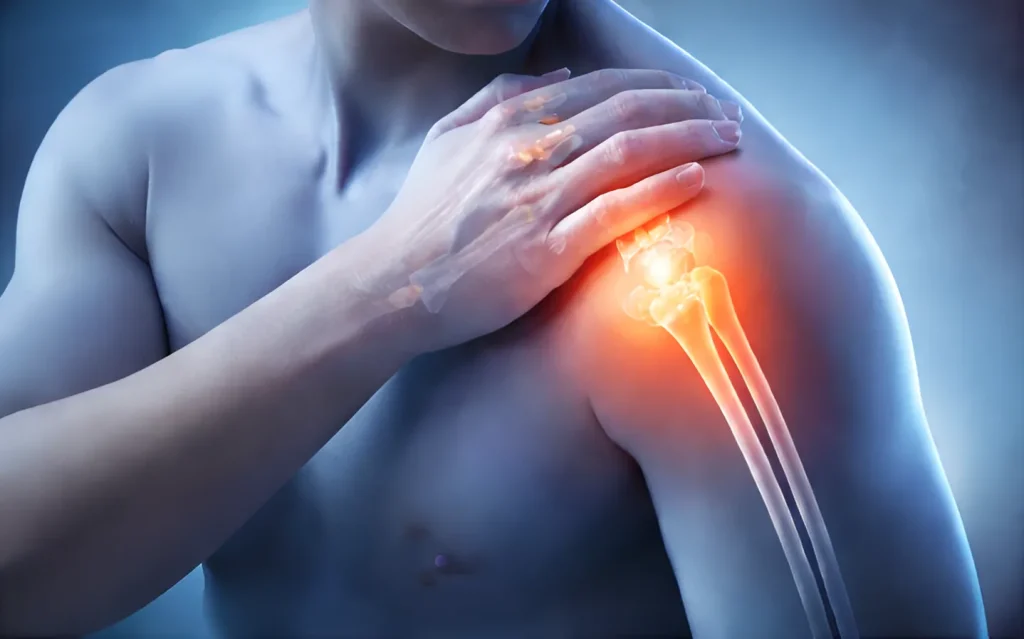
Types of Shoulder Conditions
Shoulder Arthritis
Shoulder arthritis is a degenerative condition that occurs when the smooth cartilage lining covering the joint is worn down, causing bone-on-bone grinding. The shoulder has two joints which can both be subject to arthritis, one between the ball and the socket where the upper arm ends, and another between the shoulder and the collarbone.
Symptoms
Symptoms of shoulder arthritis include pain that worsens with activity, stiffness, swelling or tenderness, and grinding and clicking when moving the elbow. You may also experience elbow weakness or have difficulty performing everyday tasks.
Causes
Shoulder arthritis can be caused by the age related wear and tear of the joint and its lining, by autoimmune inflammation, from overuse and repetitive stress, or develop after a previous injury to the wrist. It can also be caused by a longstanding untreated rotator cuff tear, or a loss of blood supply to the bone.
Diagnosis
Diagnosis typically includes a thorough medical history and physical examination, imaging such as x-rays and CT scans, as well as blood tests if an autoimmune cause is suspected.
Treatment
Each case of shoulder arthritis is unique and requires an individualised treatment plan. Management may include non-surgical and surgical options, depending on the severity of your symptoms and the underlying cause. Dr Sood will discuss all options, including their benefits and risks, during your consultation.
Rotator Cuff Tears
Rotator cuff tears involve damage to the tendons stabilising the shoulder that allow the arm to rotate and lift. The rotator cuff is a group of four muscles and tendons.
Symptoms
Symptoms typically include pain at night or with overhead activity, weakness, a reduced range of motion and a clicking or popping sensation during movement. You may also experience a tearing sensation when the injury occurs.
Causes
Rotator cuff tears can be caused by degenerative wear and tear, injury, repetitive overhead activity, poor posture, or bone spurs.
Diagnosis
Diagnosis generally includes clinical examination and various types of imaging such as MRIs, ultrasounds and x-rays.
Treatment
Each rotator cuff tear is unique and requires an individualised treatment plan. Management may include non-surgical and surgical options, depending on the severity of your symptoms and the underlying cause. Dr Sood will discuss all options, including their benefits and risks, during your consultation.
Subacromial Impingement Syndrome
Subacromial Impingement Syndrome occurs when the tendons in the shoulder become compressed or irritated beneath the shoulder blade.
Symptoms
Symptoms include pain in the front and sides of the shoulder, night pain, weakness, limited motion and difficulty lifting the arm. A catching sensation may also be felt. Symptoms can gradually worsen over time.
Causes
Subacromial Impingement Syndrome is caused by the compression of the rotator cuff tendons due to repetitive overhead activity, muscle imbalances, thickening of the tendons, bone spurs or rotator cuff weakness or fatigue.
Diagnosis
Diagnosis typically includes a thorough medical history and a physical examination, imaging such as x-rays and CT scans and possibly a diagnostic injection.
Treatment
Each case of Subacromial Impingement Syndrome is unique and requires an individualised treatment plan. Management may include non-surgical and surgical options, depending on the severity of your symptoms and the underlying cause. Dr Sood will discuss all options, including their benefits and risks, during your consultation.
Proximal Humerus Fractures
A proximal humerus fracture is a fracture of the upper arm bone near the shoulder.
Symptoms
Symptoms include shoulder pain, swelling, bruising, difficulty lifting the arm and deformity in severe cases.
Causes
Causes can include falls onto a shoulder or outstretched arm, or high-energy trauma accidents.
Diagnosis
Diagnosis typically includes a physical examination and imagery such as x-rays.
Treatment
Each proximal humerus fracture is unique and requires an individualised treatment plan. Management may include non-surgical and surgical options, depending on the severity of your symptoms. Dr Sood will discuss all options, including their benefits and risks, during your consultation.
Clavicle Fracture
A clavicle fracture is a break of the collar bone which runs between the sternum (the breastbone) and the shoulder joint.
Symptoms
A common injury, clavicle fractures are usually caused by a fall onto an outstretched arm, sports injuries or motor vehicle accidents.
Causes
Symptoms typically include pain, swelling, bruising and tenderness with asymmetry of shoulder profile. Often there is reduced shoulder mobility, with painful clicking during arm movements.
Diagnosis
Diagnosis involves a physical examination and x-rays. In complex cases, CT scans may be required.
Treatment
Each fracture will be assessed individually by Dr Sood and an individualised management plan created. Treatment may involve sling use, pain management, physiotherapy to help regain movement and follow-up appointments with x-rays to monitor the healing process. In more severe cases surgery may be required, in which case Dr Sood will discuss the benefits and risks during your consultation.
Contact Us
Have a question or ready to book an appointment?
Dr Sood’s friendly team is here to help. Contact us today to discuss your condition, make an appointment, or find out more about your treatment options.