
Treating Elbow Conditions
Expert treatment of tennis elbow, arthritis and trauma related injuries.
The elbow is a vital joint responsible for arm strength, stability and range of motion. Elbow pain and dysfunction can result from repetitive strain, degenerative wear and tear, or acute trauma related injuries – all of which can significantly affect daily activities and overall quality of life.
Learn below about the conditions that Dr Sood treats and the surgical and non-surgical treatment options designed to relieve pain and restore elbow function.
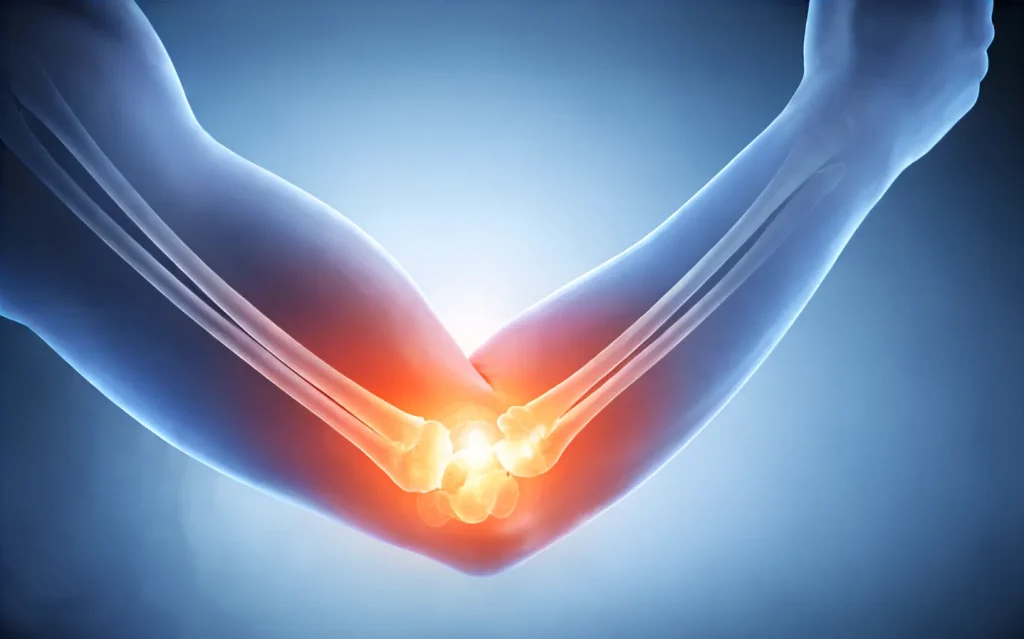
Types of Elbow Conditions
Elbow Arthritis
Elbow arthritis is a degenerative condition that occurs when the smooth cartilage covering the joint is worn down, causing bone-on-bone grinding.
Symptoms
Symptoms include pain that worsens with activity, stiffness, swelling or tenderness, and grinding and clicking when moving the elbow. You may also experience weakness or have difficulty performing everyday tasks.
Causes
Elbow arthritis can be caused by age-related wear and tear of the joint and its lining, autoimmune inflammation, overuse and repetitive stress, or develop after a previous elbow injury.
Diagnosis
Diagnosis typically involves a thorough medical history, physical examination, imaging and blood tests if an autoimmune cause is suspected.
Treatment
Each elbow arthritis case is unique and requires an individualised treatment plan. Management may include non-surgical and surgical options, depending on the severity of your symptoms. Dr Sood will discuss all options, including their benefits and risks, during your consultation.
Cubital Tunnel and Other Nerve Compression Conditions
Cubital Tunnel Syndrome and related nerve compression conditions occur when one of the nerves running through the elbow is compressed or stretched. Cubital tunnel syndrome is the most common nerve compression and occurs when the ulnar nerve is compressed at the elbow.
Symptoms
Symptoms include numbness and tingling, weakened grip strength, clumsiness and pain and discomfort around the elbow and down the forearm. These symptoms typically worsen when the elbow is held in a bent position for lengthy periods of time.
Causes
Nerve compression conditions are caused by direct pressure on the nerve at or around the elbow, through repetitive elbow bending or leaning on the elbow. Trauma or previous injuries can also cause anatomical narrowing of the cubital tunnel or thickened tissue and bone spurs, which puts more pressure on the nerve.
Diagnosis
Diagnosis typically involves a thorough medical history of activity and symptoms, as well as a physical examination to check for sensation and muscle strength. Nerve conduction studies (NCS) or electromyography (EMG may also be used if further investigation is required.
Treatment
Each nerve compression condition is unique and requires an individualised treatment plan. Management may include non-surgical and surgical options, depending on the severity of your symptoms and the underlying cause. Dr Sood will discuss all options, including their benefits and risks, during your consultation.
Distal Biceps or Triceps Injury
Distal biceps or triceps injuries are typically partial or complete tears of the tendons attaching upper arm muscles to the bones of the elbow.
Symptoms
Symptoms include sudden, sharp pain in the elbow, a popping sensation, swelling and bruising, weakness and noticeable muscle deformity.
Causes
Distal biceps or triceps injuries are typically caused by sudden forceful lifting or pushing, trauma, degeneration, repetitive overuse in heavy manual work or sports, certain medical conditions, or steroid use that affects tendon strength.
Diagnosis
A diagnosis typically involves a thorough medical history, a physical examination and imaging such as x-rays and CT scans to understand the extent of the injury.
Treatment
Each distal biceps or triceps injury is unique and requires an individualised treatment plan. Management may include non-surgical and surgical options, depending on the severity of your injury. Dr Sood will discuss all options, including their benefits and risks, during your consultation.
Radial Head Fracture and Dislocation
A radial head fracture and dislocation is when the elbow side of the larger bone in the forearm is both broken and dislocated, due to an injury. Symptoms
Symptoms
A radial head fracture and dislocation is characterised by pain, swelling, bruising and tenderness around the elbow and on the upper forearm. The patient can also experience reduced range of motion and difficulty bending or straightening the arm, and in more severe cases, visible deformities.
Causes
Dislocation and fractures of the radial head are commonly caused by high-energy traumatic injuries, either to an outstretched arm or directly to the elbow, or a motor vehicle accident.
Diagnosis
The diagnosis of a radial head fracture and dislocation must be done by a medical professional, but typically includes physical examination, and diagnostic imaging such as x-rays and CT scans to confirm the fracture, and assess the extent of damage and subsequent planning for treatment.
Treatment
Each radial head fracture and dislocation is unique and requires a different treatment plan, which can include non-operative or operative treatments, depending on the specifics of the case. Dr Sood will discuss these options, and their benefits and risks upon consultation with you.
Tennis Elbow (Lateral Epicondylitis)
Tennis Elbow is caused by overuse of the forearm muscles and tendons on the outside of the elbow.
Symptoms
Symptoms typically include pain or burning sensation on the outer elbow, which worsens when lifting, twisting and gripping objects, especially away from the body. Often grip strength weakens.
Causes
Tennis Elbow is caused by repetitive strain through occupational or sporting activities such as lifting, gripping and typing.
Diagnosis
Diagnosis involves a thorough medical history, physical examination and utilising imaging such as x-rays and CT scans to assess the extent of the damage and rule out other possible conditions.
Treatment
Each case of Tennis Elbow is unique and requires an individualised treatment plan. Management may include non-surgical and surgical options, depending on the severity of your symptoms. Dr Sood will discuss all options, including their benefits and risks, during your consultation.
Contact Us
Have a question or ready to book an appointment?
Dr Sood’s friendly team is here to help. Contact us today to discuss your condition, make an appointment, or find out more about your treatment options.