
Treating Wrist Conditions
Assessment and treatment of fractures, ganglions and ligament injuries
The wrist is a highly complex joint formed by eight small carpal bones and the two forearm bones, enabling the hand’s wide range of precise and coordinated movements. Due to its intricate structure, the wrist is particularly vulnerable to injury, instability, arthritis and nerve compression syndromes. Dr Sood specialises in the assessment and management of a range of wrist conditions.
Learn below about the conditions that Dr Sood treats and the surgical and non-surgical treatment options designed to improve strength, movement and long-term wrist health.
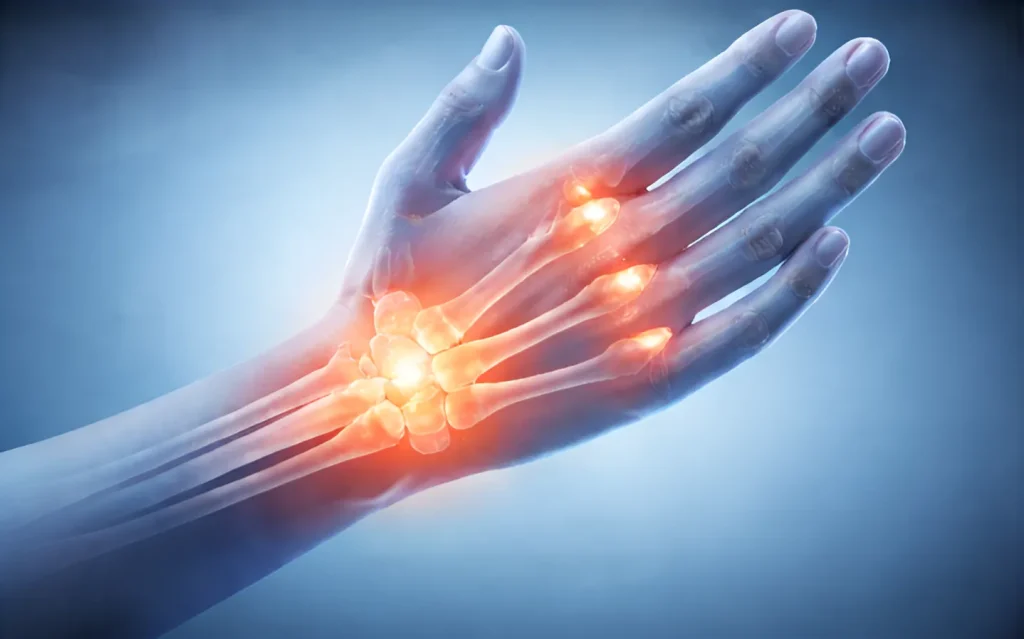
Types of Wrist Conditions
Ganglion
A ganglion is a fluid-filled cyst that forms on the wrist, arising from the sheath of the joint or tendon. It can cause discomfort and restrict movement.
Symptoms
Symptoms include a visible lump, swelling, pain or tenderness, reduced wrist movement and sometimes numbness or tingling.
Causes
The exact cause is often unknown but may relate to wrist trauma or repetitive stress.
Diagnosis
Diagnosis typically involves physical examination and imaging such as x-rays and CT scans to assess underlying structures.
Treatment
Each ganglion case is unique and requires an individualised treatment plan. Management may involve non-surgical or surgical options, depending on the severity of your symptoms and the underlying cause. Dr Sood will discuss all options, including their benefits and risks, during your consultation.
Distal Radius Fracture
A distal radius fracture is a break near the wrist end of the radius bone. It can affect wrist strength and function.
Symptoms
Symptoms include pain, swelling, bruising, deformity, and limited wrist and hand movement.
Causes
Distal radius fractures can be caused by falls onto an outstretched hand, motor vehicle accidents. The likelihood of developing fractures increases with osteoporosis.
Diagnosis
Diagnosis typically involves a physical examination and imaging such as x-rays and CT scans to determine the fracture type and severity.
Treatment
Each distal radius fracture is unique and requires an individualised treatment plan. Management may include non-surgical or surgical options, depending on the severity of your fracture. Dr Sood will discuss all options, including their benefits and risks, during your consultation.
Scapholunate Ligament Injury
A scapholunate ligament injury involves damage to the ligament connecting the scaphoid and lunate bones in the carpal region of the wrist.
Symptoms
Symptoms include wrist pain, swelling, weakness, difficulty gripping and reduced range of motion.
Causes
The scapholunate ligament is commonly caused by falls onto an outstretched hand, sports injuries, repetitive strain, or previous untreated wrist trauma.
Diagnosis
REQUIRED
Treatment
Each scapholunate ligament injury is unique and requires an individualised treatment plan. Management may include non-surgical or surgical options, depending on the severity of your injury. Dr Sood will discuss all options, including their benefits and risks, during your consultation.
Wrist Arthritis
Wrist arthritis is a degenerative condition that occurs when the smooth cartilage covering the wrist joint is worn down, causing painful bone-on-bone grinding.
Symptoms
Symptoms include pain that worsens with activity, along with stiffness, swelling, or tenderness in the affected joint. You may also experience grinding or clicking during movement, weakness, and have difficulty performing everyday tasks.
Causes
Wrist arthritis can be caused by the age related wear and tear of the joint and its lining, by an autoimmune inflammation affecting the joint, from overuse and repetitive stress or develop after a previous wrist injury.
Diagnosis
Diagnosis typically involves a thorough medical history, physical examination, imaging such as x-rays and CT scans and blood tests if an autoimmune cause is suspected.
Treatment
Each case of wrist arthritis is unique and requires an individualised treatment plan. Management may include non-surgical or surgical options, depending on the severity of your symptoms. Dr Sood will discuss all options, including their benefits and risks, during your consultation.
Contact Us
Have a question or ready to book an appointment?
Dr Sood’s friendly team is here to help. Contact us today to discuss your condition, make an appointment, or find out more about your treatment options.